By: Paige Wyant
Fibromyalgia is a chronic, incurable condition that can cause a variety of symptoms such as widespread pain, fatigue and brain fog. It is estimated to affect 10 million people in the United States and between 3 to 6 percent of the global population – and celebrities are no exception.
Although fibromyalgia is more common in women, it can affect anyone, regardless of gender, race, age or class. Celebrities may have more money and resources for expensive treatments, medications or alternative therapies, but that certainly doesn’t mean they are immune to the debilitating symptoms the condition can cause. Their platform does, however, offer them the opportunity to raise awareness and donate to research so better treatments (and potentially a cure) may one day become available.
The following celebrities have opened up about living with fibromyalgia, but hopefully more will step forward and speak up to help break down stigmas and contribute to a better understanding of the condition.
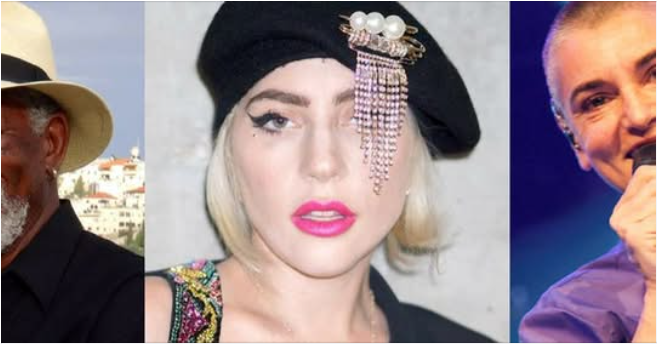
1. Lady Gaga
After being open about her struggles with chronic pain for many years, Lady Gaga confirmed in September 2017 that the cause of her pain was fibromyalgia. Previously, the musician and performer said she tested “borderline positive” for lupus and that she dealt with chronic pain after breaking her hip.
In her Netflix documentary “Gaga: Five Foot Two,” released on September 22, Gaga gave her fans a behind-the-scenes look at her struggles with pain and opened up about the challenges of finding treatments and coping techniques to help manage her symptoms.
“My pain does me no good unless I transform it into something that is. So I hope people watching it who do struggle with chronic pain know that they’re not alone. It’s freeing for me… and I want people that struggle with it to hear me,” Gaga said.
2. Morgan Freeman
In 2008, Morgan Freeman was involved in a car crash that left him with multiple injuries, including a broken arm, a broken elbow and shoulder damage. He revealed in a 2012 interview with Esquire that he continues to experience “excruciating” nerve pain and now lives with fibromyalgia.
Freeman has also been spotted wearing a single compression glove on his left hand due to the nerve damage, most recently at the 2018 Screen Actor’s Guild Awards. The compression glove helps his blood flow since he can’t move his hand.
In 2015 he told The Daily Beast he treats the pain with marijuana. “I have fibromyalgia pain in this arm, and the only thing that offers any relief is marijuana,” Freeman said. “They’re talking about kids who have grand mal seizures, and they’ve discovered that marijuana eases that down to where these children can have a life. That right there, to me, says, ‘Legalize it across the board!’”
3. Gillian Anderson
has spoken publicly about fibromyalgia, mainly in the context of her own health and advocacy for people with chronic pain.
Here’s what’s known and accurate:
-
She has confirmed she lives with fibromyalgia.
Anderson has discussed experiencing chronic pain, fatigue, and flare-ups consistent with fibromyalgia, and how it has affected her work and daily life. -
She’s talked about invisible illness and stigma.
In interviews, she’s highlighted how fibromyalgia is often misunderstood, dismissed, or minimized because symptoms aren’t visible—especially for women. -
She’s emphasized listening to your body.
Anderson has mentioned learning to pace herself, respect her limits, and prioritize rest—challenging the pressure to “push through” pain. -
Advocacy through openness, not campaigns.
While she isn’t a formal spokesperson for fibromyalgia organizations, her openness has helped normalize conversations about chronic illness and disability.
4. Mary McDonough
“The Waltons” actress Mary McDonough has been very open about her battles with fibromyalgia, lupus and Sjogren’s syndrome. She believes she developed the conditions after having an adverse reaction to breast implants she had inserted in an effort to reinvent herself following the series’ end.
“Within 24 hours I broke out into a rash all over my back and my chest,” McDonough told Smashing Interviews Magazine. “But over the course of the 10 years I just couldn’t put my finger on that. I just didn’t feel right. The chronic fatigue set in, the rashes, the rash across my nose and the bridge of my face which we now know is like a lupus rash, the joint pain, the muscle stiffness, eventually being diagnosed with fibromyalgia, and then the collagen disorder called Sjogren’s syndrome, my hair fell out and I would be tired all of the time.”
McDonough is now a public speaker, author and workshop leader, often talking with young women about their struggles with body image and self-esteem.
5. Kyle Richards
“Real Housewives of Beverly Hills” star Kyle Richards said she first became sick while her mom was sick with cancer, but was initially told she was depressed because her mom had passed. “I was like, I’m just not buying that I’m just depressed. Why am I having all these crazy symptoms?” she said on an episode of TLC’s “The Healer.”
A friend told her she might have fibromyalgia, so she went to a doctor who specializes in the condition who confirmed her diagnosis. “All of the sudden I felt like I had an answer and I felt better because it causes so much anxiety [not knowing],” Richards said.
Richards has since sought out alternative methods for treating her fibromyalgia pain — on “The Healer,” she worked with Charlie Goldsmith, an “energy healer” who aims to help people reduce their chronic pain.
6. Joely Fisher
has spoken openly and consistently about living with fibromyalgia, and she is one of the most vocal celebrity advocates for the condition.
Here’s an accurate summary of what Joely Fisher has shared:
-
She was diagnosed with fibromyalgia in the early 2000s.
Fisher has described years of widespread pain, fatigue, and flu-like symptoms before getting a diagnosis. -
She has talked about being dismissed and misunderstood.
Doctors initially told her the pain was “in her head,” which she has said is a common experience for people with fibromyalgia—especially women. -
She has described the pain in vivid terms.
Fisher has compared fibromyalgia pain to “having the flu every day” and feeling as if her body was constantly inflamed and exhausted. -
She became an advocate through education and media.
She has appeared on TV shows, interviews, and awareness campaigns to explain fibromyalgia as a real neurological pain disorder, not laziness or depression.
7. Susan Flannery
has spoken publicly about living with fibromyalgia, particularly how it affected her later years on The Bold and the Beautiful.
She has shared that:
-
Chronic pain and fatigue made long filming days increasingly difficult
-
Fibromyalgia influenced her decision to step back from acting
-
The illness was physically exhausting and limiting, not just “normal aging”
Her openness helped validate fibromyalgia as a real, disabling condition, especially in an industry that often expects people to push through pain.
8. Michael James Hastings
Michael James Hastings, known for his role as Captain Mike on “The West Wing,” had to retire from being a school teacher at age 35 due to fibromyalgia. It was his chronic pain that led him to move to Los Angeles to pursue a part-time acting career.
Hastings has said that he copes with the symptoms of fibro with natural means, such as supplements, exercise, massage therapy, acupuncture and visits to the chiropractor.
“I also have learned to accept that some days I am not going to be able to keep up with my schedule or other peoples’ schedules and I just need to rest and ‘lighten up,’” he said in an interview with the website Back Pain Relief.
9. Jennie Garth
has shared that fibromyalgia caused widespread pain, stiffness, and exhaustion that affected her daily life and career. She has talked about how long it took to get answers, the frustration of invisible symptoms, and learning to manage pain with lifestyle changes, pacing, and self-care. Her openness helped bring awareness to fibromyalgia as a real and life-altering condition.
10. A.J. Langer
Actress A.J. Langer, best known for her role on “My So-Called Life,” “Seinfeld” and “Three Sisters,” was diagnosed with fibromyalgia as a teenager but continued to pursue acting. After filming “Three Sisters,” Langer took a break to figure out how to manage her symptoms and put her health first. She has experimented with a number of alternative therapies to help her cope with fibromyalgia, including surfing, yoga and meditation.
In an episode of the Aches and Gains podcast with Dr. Paul Christo, Langer said, “There’s different levels of learning you go through with fibromyalgia… One is I’m all alone, you know, no one else understands this pain. And then there’s a point you can get to where it becomes universal and you understand that everybody’s got something. I’ve come to terms with the fact that my body has a fragile ecosystem and I’ve gotta tend to it.”
11. Rosie Hamlin
shared that fibromyalgia caused chronic pain, fatigue, and physical limitations that deeply affected her daily life. She talked about how the illness made performing and normal activities difficult, helping bring attention to fibromyalgia as a serious, invisible condition rather than something people can simply “push through.”
12. Lena Dunham
Though she had previously been vocal about her struggles with endometriosis and chronic pain, Lena Dunham revealed in an Instagram post in October of 2018 that she has fibromyalgia. She described what it’s like to have an “invisible” illness like fibro, writing, “I appear to be totally able bodied but it’s complex, and I am just trying to do everything required to maintain a life of joy and service. My work costs everything I have. This is fibromyalgia. It’s little understood and so even though I have a lot of knowledge and support it’s hard to shake the feeling I am crazy. But I’m not (at least not this way!) and you’re not.”
Dunham continued to say that pain, however it presents — whether it has a visible culprit or not — is valid. She wrote, “Your pain, whatever shape it takes, is yours and so it is real. I believe you when you say you hurt. I have learned time and time again how important it is to believe.”