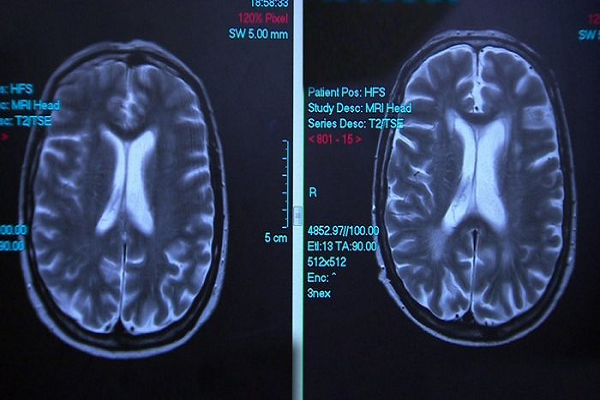
Scientists first reported finding inflammation in the brains of fibromyalgia patients.

Daniel S. Albrecht, a postdoctoral fellow in the Department of Radiology at Massachusetts General Hospital and Harvard Medical School in Boston, and colleagues joined a research team led by Anton Forsberg, Ph.D., Department of Clinical Neuroscience at Karolinska Institutet in Stockholm, Sweden, to extend the study’s generalizability and improve statistical power.
The researchers write that although there has been growing evidence that brain inflammation plays some role in fibromyalgia, this study is the first in the poorly understood and difficult-to-treat chronic condition to provide direct evidence of brain glial activation.
The results were published online in Brain, Behavior, and Immunity on September 14.
In a press release, study co-author Marco Loggia, PhD, Martinos Center for Biomedical Imaging, Massachusetts General Hospital, said, “The glial cell activation we observed in our studies activates inflammatory mediators that are thought to sensitize pain receptors and lead to symptoms such as fatigue.
We don’t have good treatment options for fibromyalgia, and finding a potential treatment target could lead to the development of new, more effective therapies. Finding measurable neurochemical changes in the brains of fibromyalgia patients could help reduce the pervasive stigma many patients experience, sometimes claiming their symptoms are irrational and there’s nothing really going on.
A total of 31 patients (29 females, mean age 50.7–11 years) who met the American College of Rheumatology criteria for fibromyalgia diagnosis and 27 healthy controls (25 females, mean age 49.4–11 years) underwent hybrid magnetic resonance/positron emission tomography (MR/PET) brain scans. Patients with fibromyalgia were withdrawn from the study if they had pain problems other than fibromyalgia.
Among fibromyalgia patients compared to healthy controls, researchers found higher levels of the glial marker TSPO, a translocator protein, in several brain regions. The degree of glial activation was also found to be linked to the degree of fatigue reported by patients.
“Ultimately, as a possible therapeutic technique, our data support glial modulation,” the authors write.
According to the Centers for Disease Control and Prevention, fibromyalgia affects nearly 4 million people in the United States.
The research was funded by the International Pain Research Association, the Martinos Center Postdoctoral Fellows Pilot Grant, and the Harvard Catalyst Advance Imaging Pilot. The Stockholm County Council, the Swedish Research Council, the Swedish Rheumatism Association, and Fibromyalgif-rbundet provided funding for the Swedish portion of the study. The research was also funded by the European Union’s Seventh Framework Program and a gift from the Lundblad family. No specific financial arrangements are disclosed by the researchers.