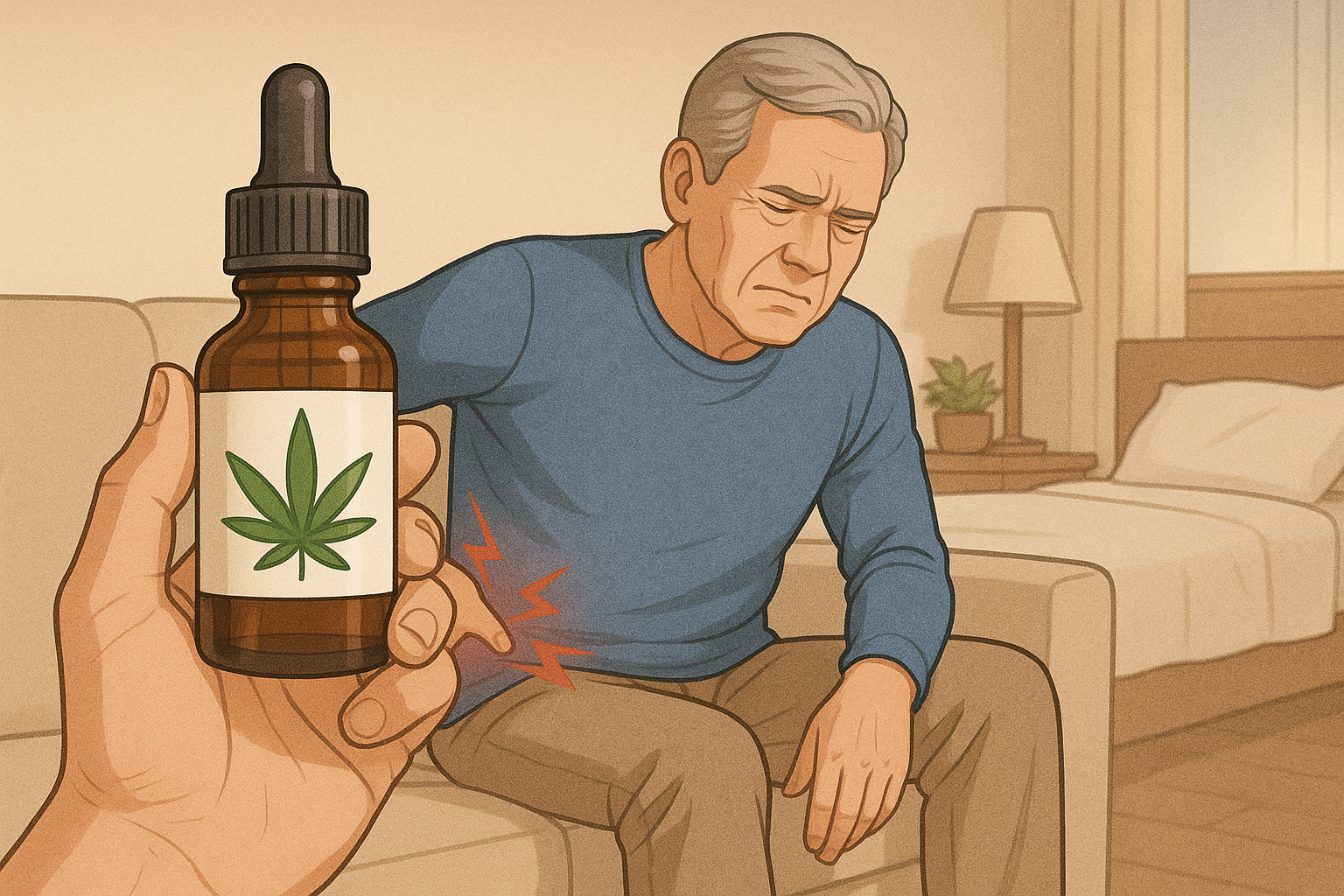
A cannabis extract has been linked to reduced pain and improved sleep and physical function in adults with chronic low back pain (CLBP) without serious side effects or addiction, new phase 3 data suggested.
Investigators evaluated VER-01, a full-spectrum Cannabis sativa extract, in more than 800 adults with CLBP who experienced insufficient relief from nonopioid medications. The benefits were sustained long-term without dose escalation and were accompanied by a reduced need for additional pain therapy.
“The key takeaway is that VER-01 provides a clinically meaningful and sustained reduction in pain while also addressing two of the most burdensome comorbidities in chronic low back pain — poor sleep and impaired physical function,” lead investigator Matthias Karst, MD, PhD, professor of pain medicine at Hannover Medical School, Hannover, Germany, told Medscape Medical News. “Importantly, these benefits were achieved without signs of dependence or withdrawal.”
The study was published online on September 29 in Nature Medicine.
High Burden, Limited Options
CLBP affects more than half a billion people worldwide and is the leading cause of disability and work loss. It is defined as pain lasting 12 weeks or longer, even after the original injury or cause of acute pain has resolved.
Current therapies often fall short. Nonsteroidal anti-inflammatory drugs (NSAIDs) provide only modest relief and carry long-term gastrointestinal, cardiovascular, and kidney risks. Opioids can reduce pain but come with high risks for tolerance, withdrawal, and addiction, and their widespread use has contributed to the global opioid epidemic.
Despite growing interest in cannabis-based therapies, prior studies have been small, short-term, and methodologically limited. “Many available datasets are heterogeneous, making it difficult for physicians and regulators to judge efficacy, safety, and risk of dependence,” Karst noted. “With VER-01, we sought to close that gap.”
The multicenter trial enrolled 820 adults with CLBP lasting more than 3 months. Participants (mean age, 52 years; 57% women) were randomly assigned to VER-01 (n = 394) or placebo (n = 426). The trial included a 12-week double-blind treatment period, followed by a 6-month open-label extension and optional continuation or randomized withdrawal.
The primary endpoint was change in mean pain intensity on an 11-point numeric rating scale. VER-01 significantly reduced pain compared with placebo, with a mean difference of -0.6 points (P < .001). In participants with neuropathic pain, the benefit was greater (-1.5; P < .001). More than half (54%) of those on VER-01 achieved at least a 30% reduction in pain compared with 40% of those on placebo.
Participants also reported better sleep quality (mean difference [MD], -0.7; P < .001) and improved physical function as measured by the Roland-Morris Disability Questionnaire (MD, -1.1; P < .001).
“These results show the potential to improve patients’ quality of life by helping them sleep better and regain physical activity — both critical for long-term outcomes,” Karst said.
In the 6-month extension, nearly three quarters of participants achieved ≥ 30% pain reduction, and more than half reached 50%. Notably, there was no evidence of dose escalation over time.
Adverse events were common during titration, particularly dizziness, somnolence, and nausea, but most were mild-to-moderate and transient. Rates of serious adverse events were comparable between groups.
“Mild side effects are not unusual when initiating cannabis-based therapies,” Karst said. “What is equally important is what we did not observe: no evidence of dependence or withdrawal.”
Notable Research
Samer Narouze, MD, PhD, chairman of the Center of Pain Medicine at Western Reserve Hospital, Cuyahoga Falls, Ohio, and division chief of pain management at UH Cleveland Medical Center, Cleveland, said the trial stands out for its rigor.
“This study is notable as it addresses two unmet needs,” Narouze told Medscape Medical News. “First, the lack of effective long-term treatments for chronic low back pain as NSAIDs and opioids have significant risks. Second, the lack of rigorously designed clinical trials assessing standardized cannabis-based products.”
He highlighted the trial’s strengths: double-blind, placebo-controlled, multicenter design, specified dosing regimen, and adequate treatment duration. Limitations included the absence of data on prior cannabis use and no formal cognitive testing.
“VER-01 offers a nonaddictive, safe, and effective therapeutic alternative, especially suited for extended use,” he added.
Other experts commented on the findings in a statement released by the UK nonprofit Science Media Centre.
“We have long argued that studies on cannabis or cannabis-based substances need to provide a high level of evidence — this is it,” Jan Vollert, lecturer in neuroscience, University of Exeter, Exeter, England, said in a statement. “We will need further studies to confirm the findings, but this is a good signal that the compound could help patients.”
This study was sponsored by Vertanical, which contributed to the study design and provided support with medical writing. An independent research organization conducted data analysis. Karst reported receiving consultancy fees from Vertanical and other cannabis-related companies, and his institution has received research support from multiple organizations. Narouze reported no relevant financial relationships. The views he expressed are his own and do not represent those of his institution. Vollert reported no conflict of interest, but he has worked with unrelated companies as a pharmaceutical industry consultant on unrelated studies. His institution has received research funding from Viatris.
Source: https://www.medscape.com/viewarticle/cannabis-extract-eases-chronic-low-back-pain-improves-sleep-2025a1000qbp?_gl=1*sjh1vj*_gcl_au*MTIzODY1NTY3OC4xNzY0NTEyMTkx&form=fpf